Skip to product information
1 of 6

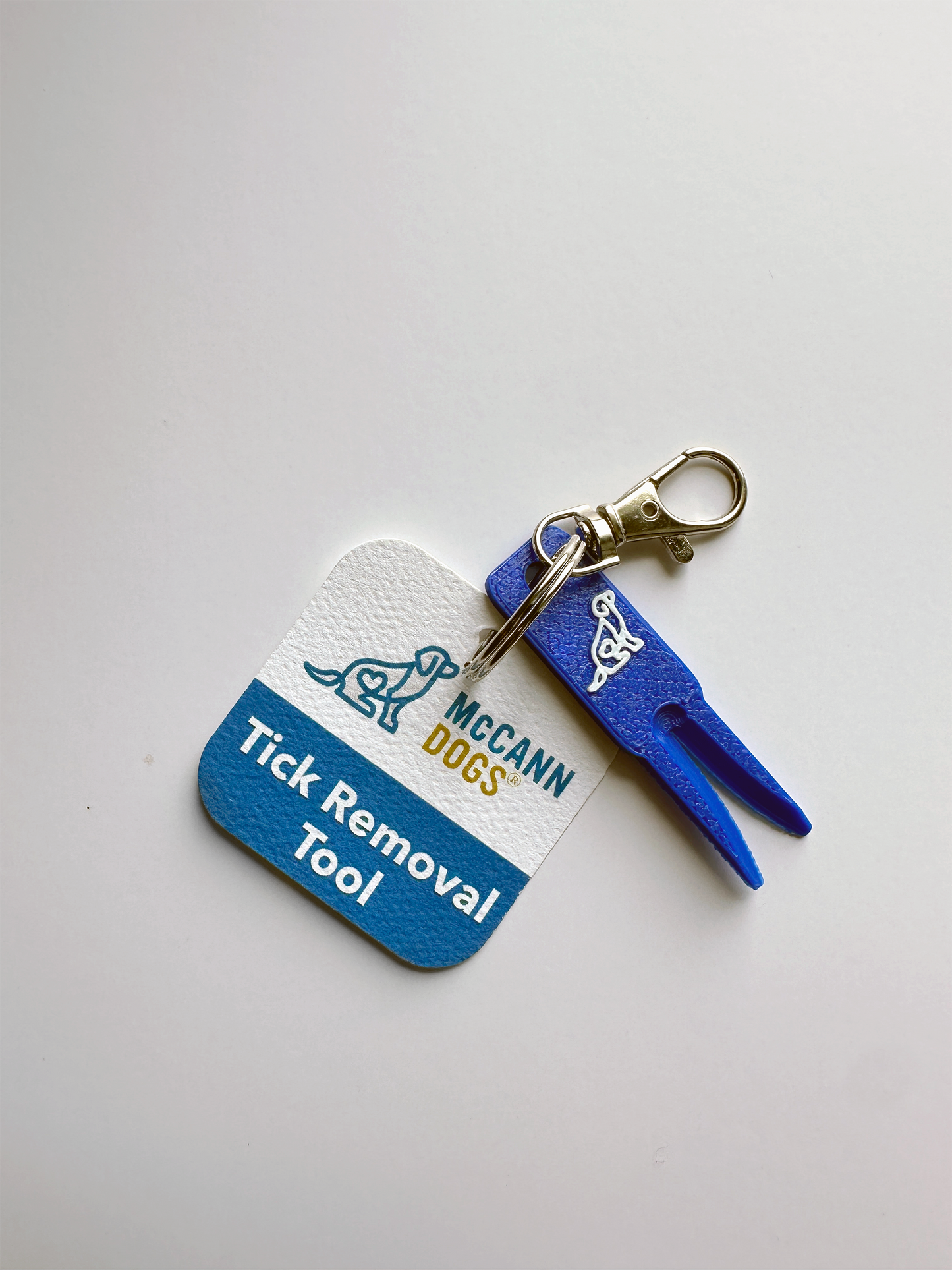
Tick Removal Tool

Tick Removal Tool

Regular price $4.99 CAD
Regular price Sale price $4.99 CAD
Sale Sold out
Shipping calculated at checkout.

Ticks Don’t Wait for a Convenient Moment

You finish a trail walk, a field session, a backyard recall drill, and there it is. Most people freeze. Some people grab whatever’s nearby or try to remove it with their fingernails, and that makes it worse. 

But now the Tick Remover Tool exists, so that’s not you.

It pulls the whole tick. No squeezing, no twisting, no leaving the head behind. Works whether your dog is a smooth-coated Vizsla or something with enough fur to lose a television remote in.

A few things worth knowing:

  • Removes the full tick cleanly, without the squeezing that can push bacteria into the bite site
  • Fits any coat. Short, long, thick, double-coated, all of it
  • Small enough to forget it’s there until you actually need it
  • Gentle enough for a 10-week-old puppy, effective on a 90-pound adult
  • Built-in key ring and clip so it lives on your leash bag, training vest, or gear, and not in a drawer somewhere

That last one matters more than it sounds. A tool you can’t find is a tool you don’t have.

Whether you’re out on a trail, running through field work, or just wrapping up a session in the backyard, this is the kind of thing you want clipped to your kit before you need it. Not after.

View full details

Frequently Asked Questions

Should I twist the tick while pulling it out?
No. You should never twist, jerk, or rotate the tick. Major health authorities, including the Public Health Agency of Canada, advise using fine-tipped tweezers or a removal tool to grasp the tick as close to the skin as possible and pulling upward with steady, even pressure (Lyme disease in Canada: Focus on children, 2014). Twisting the tick can cause the mouthparts (often mistakenly called the 'head') to break off and remain embedded in your skin. The goal is a straight, vertical extraction to keep the tick intact.
What happens if the 'head' or mouthparts break off in my skin?
While it can be unsettling, it is not a medical emergency. If the mouthparts break off and you cannot easily remove them with clean tweezers, health guidelines suggest you leave them alone and let the skin heal (Preventing mosquito and tick bites: A Canadian update, 2014). The mouthparts themselves do not transmit disease once the body of the tick is removed. Your body will naturally 'slough off' the remaining parts as the skin heals, similar to how it handles a small splinter (Taylor et al., 2019). Attempting to dig them out can often cause more skin trauma and increase the risk of a secondary bacterial infection.
Why is 'steady pressure' better than twisting tools?
The 'steady pressure' method is designed to remove the tick without compressing its abdomen. Twisting or squeezing the body can potentially force the tick's saliva or stomach contents—which may contain pathogens like Borrelia burgdorferi (the bacteria that causes Lyme disease)—into your bloodstream (McCollough, 2018). Consistent, upward pressure allows the tick's barbs to release naturally from the skin without the mechanical stress that causes the tick to 'regurgitate' or break apart.