

Last Updated: November 14, 2026
Quick Summary
Professional dog training in Hamilton at McCann Professional Dog Trainers is owner-led, so you learn to train your own dog while an instructor coaches you. We have trained well over 100,000 dogs and their people since 1982 at our 21-acre school in Flamborough, and we place each dog in the program that fits.
- We started in a church basement in 1982 and now train on 21 acres in Flamborough, part of Hamilton.
- We offer 28 ways to train, from Puppy Essentials and Life Skills 1 through 4 to Rally, Agility, online and private lessons.
- We set dogs up to succeed first, then add distractions, distance and time through proofing.
- Trainers answer the phone six days a week, and online students get the same support.
- We keep equipment simple: flat buckle collars and Gentle Leaders, never prong, e-collar or slip collars.
Table of Contents
- Our Story
- How We Train: Success First, Distractions Later
- The People Who Teach You
- Puppy Training Classes, Dog Obedience Training and Private Dog Training Lessons
- Frequently Asked Questions
Professional Dog Training In Hamilton
Maybe the leash walk feels like waterskiing. Maybe your dog sits beautifully in the kitchen and acts like he's never heard the word outside. Professional dog training in Hamilton should leave you with skills you can use on your own street, not just in a building. At McCann Professional Dog Trainers, we've trained well over 100,000 dogs and their people since 1982. Start with our Dog Training Hamilton page.
Our Story
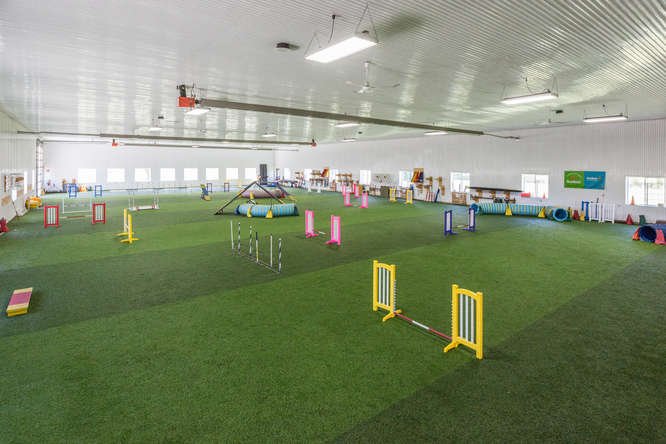
We started small, in a church basement, and grew into a purpose-built school on 21 acres in Flamborough, part of Hamilton. Separate entrance and exit doors mean a dog coming in never meets a dog going out nose to nose, and a private lot lets you get your dog out of the car without someone else's dog beside you.
How We Train: Success First, Distractions Later
We set dogs up to succeed before we ask them for anything. Food, toys, body language and guidance come first. A cue is the word or hand signal you use to ask for a behaviour, and proofing means practising around more distractions, distance and time until it holds up anywhere. We do use corrections when needed, at the right level for that dog, with good timing, and always followed by guidance toward the right choice. The least correction is the best correction, provided it creates change. We never correct confusion. Teach first, test later. That's why we train people rather than dogs. If your puppy is biting or jumping, the puppy house line article covers the tool we reach for first, and here's how we teach a dog to come when called.
The People Who Teach You
Our classes are owner-led, so you're the one holding the leash while an instructor coaches you through it. Trainers answer the phone six days a week, and online students get that same support. We keep equipment simple: flat buckle collars and Gentle Leaders, never prong, e-collar or slip collars.
Puppy Training Classes, Dog Obedience Training and Private Dog Training Lessons
We run 28 ways to train, and we place each dog in the one that fits. Puppy training classes start with Puppy Essentials, covering socialization and early habits that are easier to build now than fix later. Dog obedience training for older puppies and adults starts in Life Skills 1, with sit, down, stay, loose leash walking and coming when called, then Life Skills 2 builds toward off-leash listening. Life Skills 3 and 4 keep going, and students move into Rally, Agility, workshops and private dog training lessons as goals change. Online dog training is there for families who can't make the drive. Start your training with the McCann Method, or go straight to Life Skills 1 if your dog is past the puppy stage.
Tell us a bit about your dog. What's going well, and what you need help with. Reach out through mccanndogs.com and we'll point you to the right program and go over the pricing options.
Happy Training!
Frequently Asked Questions
How do I choose a professional dog trainer?
Ask what happens when your dog gets it wrong, because the answer tells you a lot. A good trainer sets the dog up to succeed first, teaches the behaviour before testing it, and uses the least correction that actually creates change. Watch a class if you can, and look at whether the dogs seem loose and trying or flat and worried. Ask who will teach you and how those instructors learned. Dog training isn't regulated in Ontario, so anyone can call themselves a trainer. The questions you ask matter more than the label on the door.
What should I expect from a dog training class?
Expect to do the handling yourself while a trainer coaches you through it. We train people, not dogs, so the skills hold up at home and on your street, not just in the building. Classes run weekly, which keeps you practising between sessions. You'll work on things like sit, down, stay, loose leash walking and coming when called, and the trainer will explain terms like cue (the word or signal you give) and proofing (adding distractions, distance and duration until the behaviour holds anywhere) as you go.
Can I speak with a trainer if I need help between classes?
Yes. Trainers answer the phone six days a week, and we support online students the same way. If something isn't working at home, call and talk it through with a real trainer rather than guessing for another week. That's often the fastest fix, because a small timing issue can make a cue look like the dog is being "stubborn" when it's really confused. For a lot of our students, that first class turns into years of training together, and the support continues as their goals change.
